Discover how U.S. Healthcare Regulation is evolving with the 8 critical FDA guidance updates set to redefine compliance in 2026 for medical devices, pharmaceuticals, and regulatory professionals.
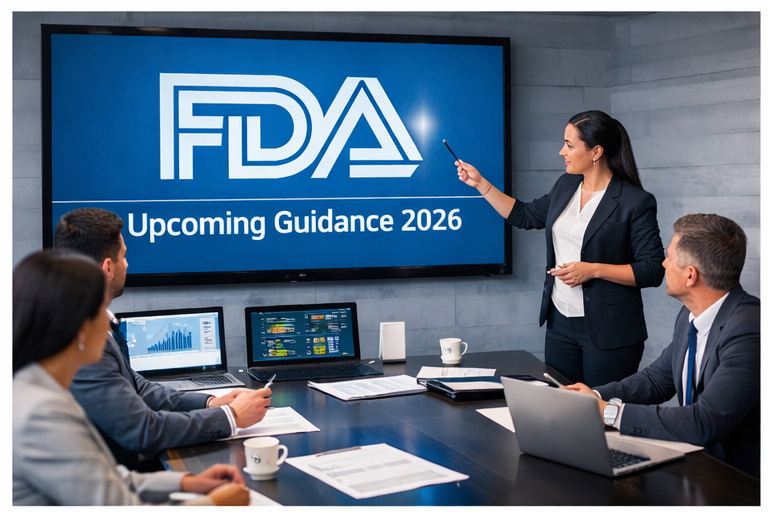
Why 2026 Will Be a Turning Point for U.S. Healthcare Regulation
U.S. Healthcare Regulation is entering one of its most transformative periods in decades. As science advances faster than traditional oversight models, regulators are adapting to keep pace with innovation while protecting patient safety. In 2026, compliance expectations will shift significantly, especially for organizations operating under the oversight of the U.S. Food and Drug Administration.
For regulatory affairs professionals, medical device manufacturers, pharmaceutical companies, and compliance leaders, these updates are not minor adjustments—they represent a redefinition of how compliance is built, documented, and sustained. Companies that prepare early will gain a competitive advantage, while those that lag may face costly delays, warning letters, or enforcement actions.
This article explores the eight FDA guidance updates that will reshape U.S. Healthcare Regulation in 2026, explaining what they mean, why they matter, and how professionals can prepare strategically.
Overview of the FDA’s Evolving Regulatory Philosophy
The FDA’s recent guidance trends show a clear direction:
- Risk-based oversight over checkbox compliance
- Lifecycle regulation instead of one-time approvals
- Digital-first documentation and monitoring
Rather than slowing innovation, the agency is redefining U.S. Healthcare Regulation to encourage safer, faster, and more transparent product development. This shift affects every phase of the product lifecycle—from design and clinical evaluation to post-market surveillance.
Lifecycle-Based Regulatory Oversight
Under updated guidance, compliance will extend beyond approval into continuous performance monitoring. Manufacturers must demonstrate ongoing safety and effectiveness using real-world evidence.
What this means for professionals:
- Regulatory strategy must include post-market data planning
- Compliance teams need stronger coordination with quality and clinical teams
Expanded Use of Real-World Evidence (RWE)
The FDA is formally expanding acceptance of real-world data from registries, wearables, and electronic health records to support regulatory decisions.
Impact on U.S. Healthcare Regulation:
- Clinical trial design becomes more flexible
- Data integrity and traceability requirements increase
AI and Machine Learning Governance Frameworks
AI-enabled medical products will face clearer validation, transparency, and change-management expectations.
Key compliance considerations:
- Algorithms must be explainable
- Continuous learning systems require FDA change protocols
.png)
Strengthened Cybersecurity Requirements
Cybersecurity is now considered a patient safety issue, not just an IT concern.
Regulatory implications:
- Threat modeling becomes mandatory
- Post-market vulnerability management plans are required

Modernized Quality Management System (QMS) Expectations
Updated guidance aligns FDA expectations more closely with international standards while emphasizing digital quality systems.
Professional takeaway:
- Paper-based QMS models will struggle
- Audit readiness must be real-time
Decentralized and Hybrid Clinical Trial Guidance
The FDA is formally supporting decentralized trials, including remote monitoring and digital endpoints.
Why this matters:
- Faster enrollment and broader patient diversity
- New compliance risks around data privacy and consent
Enhanced Post-Market Surveillance Obligations
Manufacturers must proactively detect and address safety signals using advanced analytics.
Compliance shift:
- Passive reporting is no longer sufficient
- Predictive safety monitoring is becoming the norm
Greater Transparency and Public Accountability
The FDA is expanding public access to regulatory decision rationales, especially for novel technologies.
Result for organizations:
- Regulatory submissions must be clearer and more defensible
- Internal documentation quality becomes externally visible

How Professionals Should Prepare for FDA Compliance in 2026
To stay ahead in U.S. Healthcare Regulation, professionals should:
- Invest in regulatory intelligence systems
- Cross-train regulatory, quality, and data teams
- Build compliance strategies around continuous evidence generation
- Engage in early FDA interactions and pre-submission meetings
A proactive approach reduces regulatory friction and builds long-term trust with regulators.
Frequently Asked Questions (FAQs)
1. Why is U.S. Healthcare Regulation changing so rapidly?
Because innovation in digital health, AI, and personalized medicine is advancing faster than traditional regulatory models.
2. Will FDA guidance updates be mandatory?
Guidance documents are non-binding, but they strongly influence enforcement expectations.
3. How do these updates affect small and mid-sized companies?
Early planning is critical, as resource constraints make reactive compliance risky.
4. Are these changes aligned with global regulations?
Yes, many updates reflect harmonization with international regulatory standards.
5. What is the biggest compliance risk in 2026?
Failure to implement continuous post-market monitoring systems.
6. Where can professionals track official FDA guidance updates?
Directly through the FDA website: https://www.fda.gov
Conclusion: Compliance as a Strategic Advantage
In 2026, U.S. Healthcare Regulation will no longer reward minimal compliance. Instead, it will favor organizations that embed regulatory thinking into innovation, quality, and data strategy. The eight FDA guidance updates outlined here are not obstacles—they are signals pointing toward a smarter, more resilient regulatory ecosystem.
Professionals who adapt early will not only avoid enforcement risks but also position their organizations as trusted leaders in healthcare innovation.